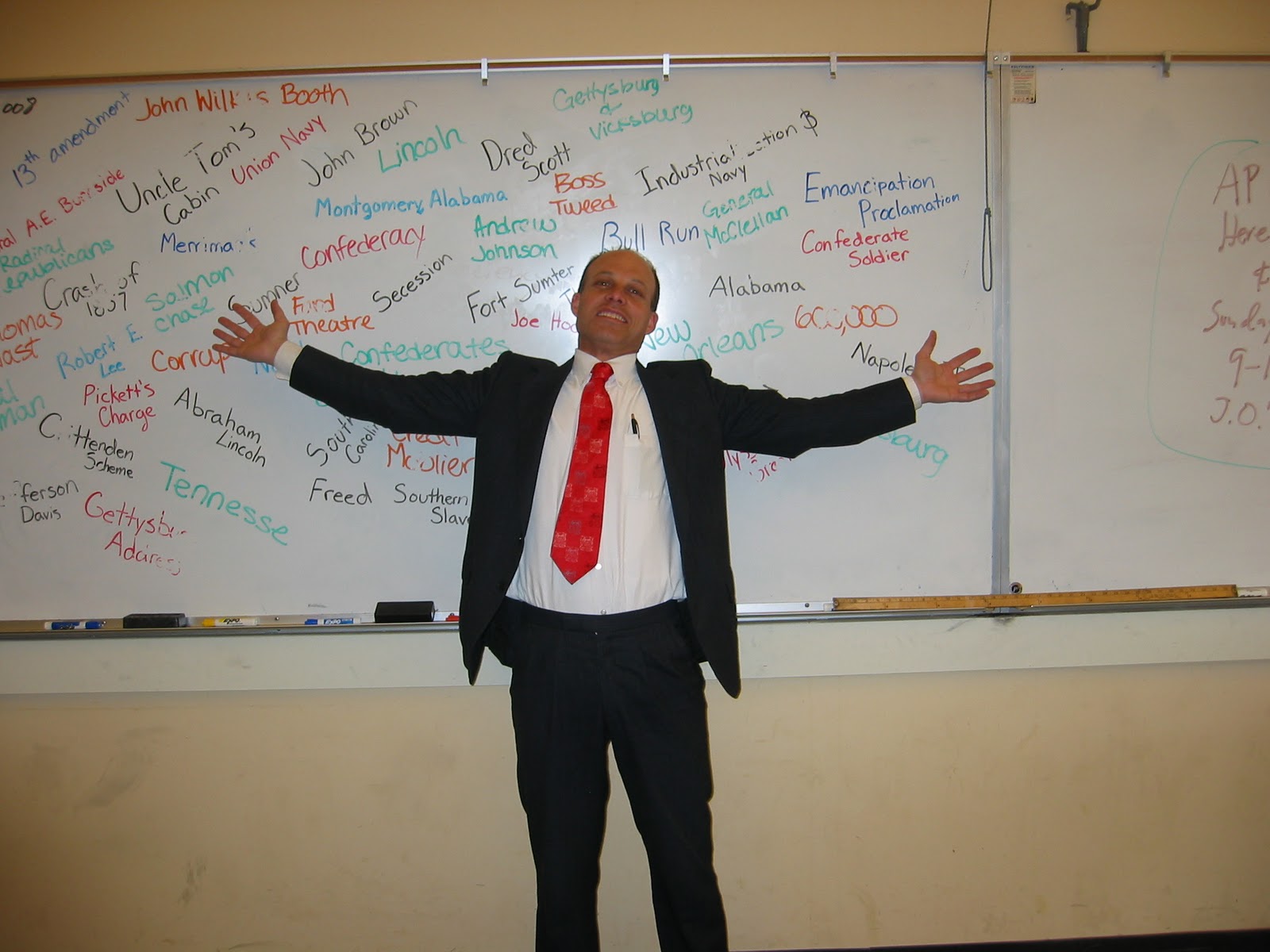
Start off your World History or European History class by getting the kids out of their seats. After they read an overview about the causes of the French Revolution, try my dramatic enactment or compose a skit of your own. As you work through the French Revolution unit, assign all the students a position (1st, 2nd, or 3rd Estate) and treat them (within reason) accordingly. For example, at first I give the nobility free cokes and chips, which normally are never allowed. I instruct the nobility to keep the goodies for themselves. When the Jacobins take over, the more educated of the third estate get the goodies, etc. If you use the skit, please give me feedback.
Mike Spinrad/San Marin High School
Name_______________________________ Date __________________
“Liberty, Equality, Fraternity” Skit
Instructions: If you were picked for a role, please come up to the front of the class. If not, please listen carefully to the skit and fill in the correct names below.
Characters
Guy Flambeau: third estate, peasant of the countryside
Ricard Poisson: third estate, cloth spinner of Paris
Cardinal Rouge: First Estate, Upper Clergy
Father Sympathique: First Estate, Lower Clergy
Baron Caniche: Second Estate
King Louis XVI: King of France
Queen Marie Antoinette: Queen of France
_________________________________________________________________
Scene…a salon, Paris, 1789
Guy Flambeau: The price of wheat is so high, I can’t feed my family. We pay so much money in taxes that I might have to sell everything and beg in the streets. We third estate peasants are all ready to revolt.
Ricard Poisson: I am with you my friend. I used to believe that it was G-d’s will that we should be poor, but I have been hearing about the ideas of the philosophes. We must fight for justice!
Baron Caniche: We will crush you scum if you dare to revolt. I can have you both put in the Bastille just for speaking out against the government. You third estate people do the work and pay the taxes. We nobles have fun at the king’s court.
Cardinal Rouge: We upper clergy have it even better! We pay no taxes, own ten percent of the land of France, and I rarely even attend church services. I just like hanging out in my chateau and scheming against certain nobles like your friends, Caniche.
Father Sympathique: Your behavior is scandalous, Cardinal. I spend all the day attending to the needs of the poor.
King Louis XVI: I am the king to the whole nation, rich or poor. I am of the long running Bourbon dynasty. I have a right to rule France that was given to me by G-d. The nobles refuse to pay any taxes. If I can’t get more tax money from the peasants, I just don’t know what I will do. I think I will take a break and fix some clocks in my shop next to Versailles.
Queen Marie Antoinette: Your highness, I’ve almost finished making you a nice sweater.
Which characters support the following policies?
1. Bourbon dynasty:_______________________________________
2. Divine right to rule:_____________________________
3. Privileges of the Second Estate:____________________________________
4. Desperation of the peasants:_______________________________________
5. Third estate pays the taxes and does the work:_______________________________
6. Influence of the philosophes:__________________________
7. Attends to the needs of the poor:__________________________________
8. Is attuned only to the needs of the king:________________________________
9. Is not particularly religious:__________________________
Extra Credit: What is the difference in point of view of Guy Flambeau and Ricard Poisson? Why do they look at the situation differently?
________________________________________________________________________________________________________________________________________________________________________________________________________________________________________________________________________________________________
Mike Spinrad/San Marin High School
Name_______________________________ Date __________________
“Liberty, Equality, Fraternity” Skit
Instructions: If you were picked for a role, please come up to the front of the class. If not, please listen carefully to the skit and fill in the correct names below.
Characters
Guy Flambeau: third estate, peasant of the countryside
Ricard Poisson: third estate, cloth spinner of Paris
Cardinal Rouge: First Estate, Upper Clergy
Father Sympathique: First Estate, Lower Clergy
Baron Caniche: Second Estate
King Louis XVI: King of France
Queen Marie Antoinette: Queen of France
_________________________________________________________________
Scene…a salon, Paris, 1789
Guy Flambeau: The price of wheat is so high, I can’t feed my family. We pay so much money in taxes that I might have to sell everything and beg in the streets. We third estate peasants are all ready to revolt.
Ricard Poisson: I am with you my friend. I used to believe that it was G-d’s will that we should be poor, but I have been hearing about the ideas of the philosophes. We must fight for justice!
Baron Caniche: We will crush you scum if you dare to revolt. I can have you both put in the Bastille just for speaking out against the government. You third estate people do the work and pay the taxes. We nobles have fun at the king’s court.
Cardinal Rouge: We upper clergy have it even better! We pay no taxes, own ten percent of the land of France, and I rarely even attend church services. I just like hanging out in my chateau and scheming against certain nobles like your friends, Caniche.
Father Sympathique: Your behavior is scandalous, Cardinal. I spend all the day attending to the needs of the poor.
King Louis XVI: I am the king to the whole nation, rich or poor. I am of the long running Bourbon dynasty. I have a right to rule France that was given to me by G-d. The nobles refuse to pay any taxes. If I can’t get more tax money from the peasants, I just don’t know what I will do. I think I will take a break and fix some clocks in my shop next to Versailles.
Queen Marie Antoinette: Your highness, I’ve almost finished making you a nice sweater.
Which characters support the following policies?
1. Bourbon dynasty:_______________________________________
2. Divine right to rule:_____________________________
3. Privileges of the Second Estate:____________________________________
4. Desperation of the peasants:_______________________________________
5. Third estate pays the taxes and does the work:_______________________________
6. Influence of the philosophes:__________________________
7. Attends to the needs of the poor:__________________________________
8. Is attuned only to the needs of the king:________________________________
9. Is not particularly religious:__________________________
Extra Credit: What is the difference in point of view of Guy Flambeau and Ricard Poisson? Why do they look at the situation differently?
________________________________________________________________________________________________________________________________________________________________________________________________________________________________________________________________________________________________