Showing posts with label social studies. Show all posts

Saturday, October 22, 2011

Tiger Mother in the Classroom


“My pappy taught me to work hard, but he never taught me to like it.” Abraham Lincoln

Books on tape (or CD) are my favorite technological invention. I listened to Amy Chua’s bestseller, Battle Hymn of the Tiger Mother, on my commute. (See a summary and balanced review here. See a negative, snarling review of the book here)

I think both of the above reviewers miss the essence of the book. Children don’t want to work hard if left to their own devices. Parents and teachers must give children a stomach for hard work and assist them in developing persistence and an ability to weather setbacks. Only then can success and enjoyment begin.

Teaching differs little from parenting. Outside of AP classes, not many high school sophomores want to work hard. Even fewer want to work hard reading history. Fewer still want to study the World History standards mandated by California professors. These standards include Plato and Aristotle, the English Bill of Rights, the French Revolution, and British Industrialization. That’s only part of the curriculum for the first semester.

Good innovative high school history teachers employ partnering, group activities, simulations, debates, and technology. We work hard to keep students engaged in material that isn’t engaging on its own. We’ll do whatever it takes. If they don’t do the work offending students are punished with lectures about what it takes to succeed, remediation sessions, and, of course, poor grades. We will train you to work hard. Like Abe Lincoln’s pappy, we don’t care if you like it or not.

When these kids have matriculated they have a sharper focus on what they want to pursue in life, and some decide to get a college degree. The first two years as an undergraduate are, again, filled with university and major requirements, many not to the student’s liking. The minority that get through those first two years and attempt upper division college work finally explore courses of interest. That’s a lot of years in school satisfying others' requirements, about 15 years, before a student gets to follow his or her bliss. Let’s hope that someone has taught these kids the art of persistence somewhere along the way.


Friday, December 31, 2010

A Study on the Value of Teacher Feedback

Teachers spend copious amounts of time commenting on students’ social studies papers. Teachers may comment on the students’ understanding or misunderstanding of the unit content, completeness and balance of analysis, and investigation and comparison of sources. Additionally, teachers typically comment on the logic and structure of the paper, grammar, spelling, proper academic language, and other literacy aspects of academic writing.

If the teacher comments are interpreted as constructive criticism, the student is engaged in a joint productive activity. “Learning occurs most effectively when experts and novices work together for a common product or goal, and are therefore motivated to assist one another”(Center for Research on Education, Diversity & Excellence, Five Standards for Effective Pedagogy, 2002, www.crede.ucsc.edu/tools/research/standards/standards.html). This is well and good, but do high school students interpret teacher comments on papers as constructive criticism? More basically, do the students even read the comments, and if so, do they use those teacher comments as a guideline for the next paper? That was the question I asked 22 High School history students. I was unable to find previous studies that answered my questions. However, I speculate that the research has been done and is in some education or psychology journal. Perhaps I’ve stumbled upon a research idea for someone’s masters thesis.

I gave a tenth grade World History class the following instructions. (The number of students that answered is in parentheses.)

Please put your head down, and don’t be influenced by your neighbor. I want your honest analysis—not what you think I want to hear. You may pick from four possible answers: never, seldom, usually, or always. Raise your hand for the best answer for two questions:
A. When a teacher corrects a paper I wrote, I read the comments… never (1), seldom (2), usually (7), or always (10).
B. When I write the next paper for that same teacher, I use the comments on the first paper as a guideline... never (4), seldom (4), usually (10), or always (2).

The total number of students in the class was 22. Two students refused to participate.

The total sample size was too small to extrapolate to a more general population of high school students. If the same trend was found on a larger sample size, such as fifty or more students, and one drew from a statistically normal population, disturbing conclusions could be reached. Despite lessons from a skillful and accomplished educator, large numbers of students do not engage in a joint productive activity with their teacher. If 40% of students don’t use teacher comments constructively, the assessment process is no longer a feedback loop. Instead, assessment is only a means for the teacher to determine a grade.

Fortunately, schools can fix this problem before high school. Grammar schools can and should teach students how to use teacher feedback.

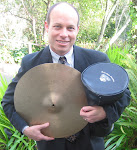
Teacher by Day, Drummer by Night

Teacher by Day, Drummer by Night
Please recommend this blog to others

Popular Posts